
Written By: Dawn Neville, VETS Group
Deferred today. Paid for tomorrow. Condominium boards and property managers face difficult choices every budget season. Rising operating costs, reserve fund obligations, insurance premiums and inflation all compete for limited resources. When budgets tighten, HVAC maintenance can appear to be one of the easier expenses to reduce or postpone.
Unfortunately, mechanical systems do not recognize budget cycles. Unlike cosmetic improvements, boilers, make-up air units, pumps, fans, controls and ventilation equipment continue operating every day.
Small deficiencies continue to grow, efficiency continues to decline and wear continues to accumulate. What looks like a short-term saving can return months later as higher utility bills, resident complaints, costly emergency repairs or premature capital replacement.
Deferred maintenance rarely eliminates a cost. More often, it changes when the cost arrives, how disruptive it becomes and how much the condominium corporation ultimately pays.
The cost that does not always appear on a repair invoice
One of the earliest effects of deferred HVAC maintenance is increased operating cost. As filters become restricted, coils accumulate dirt, bearings wear and controls drift out of calibration, equipment must work harder and run longer to maintain heating, cooling and ventilation. The impact is often gradual, appearing as higher utility consumption, increased strain on equipment and less consistent comfort rather than a major breakdown, allowing the true cost of deferred maintenance to remain hidden within everyday operating expenses.
Common warning signs
- Utility costs rising without a clear reason
- Uneven hallway or common-area temperatures
- Stale air, excess humidity or persistent odour migration or complaints
- Increased resident comfort complaints
- More frequent service calls and temporary repairs
- Mechanical equipment running longer or cycling more often
When a small deficiency becomes a chain reaction
Deferred maintenance rarely produces only one consequence. A dirty coil can reduce heat transfer, which increases run time, which raises energy use and places additional load on motors and compressors. A worn belt can affect airflow, which can alter building pressurization and contribute to drafts, odour migration or poor ventilation. A minor control problem can cause equipment to short-cycle, increasing wear while making comfort less predictable.
The hidden costs condominium corporations commonly experience include emergency repairs instead of planned repairs, earlier equipment replacement, reduced asset life, increased utility consumption and greater pressure on reserve funds. In an emergency, boards may also lose the ability to compare options, coordinate funding, schedule work during lower-demand periods or wait for preferred equipment to become available.
The global HVAC market continues to face pricing and supply pressures driven by material costs, tariffs, changing refrigerant requirements and complex international supply chains.
In Canada, this can translate into higher equipment costs and extended lead times, particularly for larger or specialized equipment such as boilers, cooling towers and chillers. Depending on equipment size and specifications, replacement equipment can take several months or longer to manufacture and deliver.
For condominium corporations, understanding equipment condition and expected service life/ equipment list provides valuable time to plan, budget and source the right replacement rather than being forced to make an urgent decision based on what is available when critical equipment fails
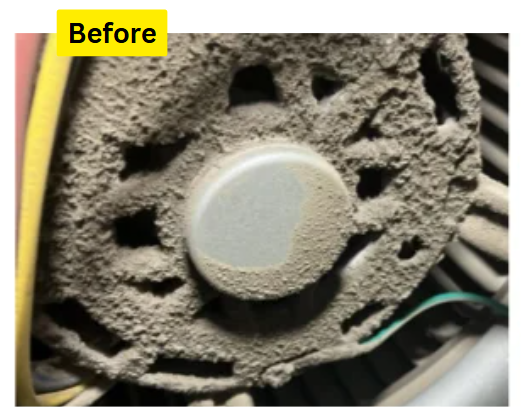
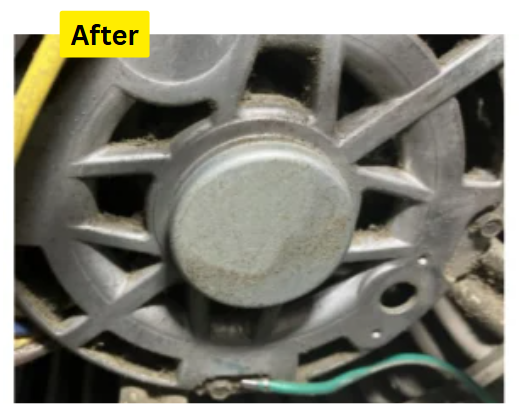
Before-and-after example of in-depth maintenance on an HVAC motor assembly. Image supplied by VETS Group.
A real-world example: moving from reactive spending to predictable costs
A large western Canadian multi-use facility (over 140,000 square feet) offers a useful illustration of the financial difference between reacting to HVAC failures and managing mechanical assets proactively. The site included 223 HVAC assets, more than 600 tons of cooling and over 6,000 horsepower of connected equipment.
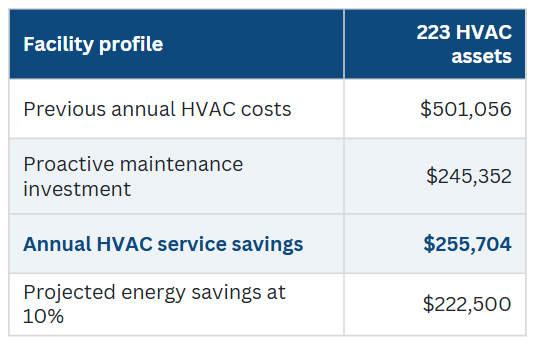
Before the maintenance strategy was changed, annual HVAC service costs were approximately $501,056. Following a comprehensive asset assessment and implementation of a fixed-cost proactive maintenance program, the annual investment was $245,352. That represented annual HVAC service savings of $255,704, while also improving budget predictability and equipment reliability.
The example is commercial rather than condominium-specific, and each building’s results will vary. The principle, however, is directly relevant to condominium corporations: knowing the condition of the assets, addressing deficiencies before failure and converting unpredictable repair exposure into planned maintenance can materially improve both operating performance and financial control.
The impact residents feel every day
The reach of deferred HVAC maintenance does not stay in the mechanical room. It eventually reaches individual residents. While owners may be responsible for certain in-suite equipment, those systems still rely on the building’s central mechanical infrastructure to operate as intended. Boilers, make-up air units, air handling units, ventilation systems, pumps and building automation controls work together to maintain comfortable and healthy conditions.
When central systems begin to decline, residents may experience uneven temperatures, poor airflow, stale air, increased humidity, excess dust or odours travelling between suites. In many cases, these complaints are symptoms of broader building-level performance issues rather than isolated problems within one unit.
Deferred maintenance can also force fan coils, heat pumps and other in-suite equipment to run longer than designed. That can increase energy use, accelerate wear and generate additional service calls for residents and property management teams.
Maintenance and the reserve fund are part of the same strategy
Operating budgets and reserve fund plans are often discussed separately, but HVAC maintenance connects the two. Proactive maintenance provides information about asset condition, recurring deficiencies and probable remaining service life. That information allows boards and managers to make better capital decisions before an emergency removes their options.
A planned replacement can be evaluated, competitively priced, coordinated with other projects and scheduled to reduce resident disruption. An emergency replacement is usually driven by urgency, availability and the immediate need to restore service. Deferring modest operating expenditures can therefore accelerate major capital expenditures and place pressure on the reserve fund years earlier than anticipated.
Understanding Equipment Service Life
Mechanical equipment has an expected service life, but age alone does not determine when an asset will require replacement. ASHRAE estimates, for example, place the service life of many common building systems within broad ranges: boilers may range from approximately 15 to 35 years depending on their type, package chillers around 20 to 25 years, cooling towers approximately 20 years or more, and pumps, motors and fans commonly between 10 and 25 years depending on their application.
These timelines are useful for long-term capital planning, but they should not be treated as automatic replacement dates. Maintenance history, operating conditions, equipment loading and the actual condition of the asset all influence how long equipment remains reliable.
For condominium boards, this is where preventive maintenance and reserve fund planning intersect. Regular inspections and preventative maintenance help establish whether an asset is performing as expected for its age, whether deterioration is accelerating and whether a repair or replacement should begin to be planned before failure dictates the timing.
Questions boards and managers should be asking
- Do we have a complete and current inventory of the building’s mechanical assets?
- Are recurring deficiencies being tracked, or are service calls treated as isolated events?
- Does maintenance reporting clearly identify condition, risk and recommended timing?
- Are energy trends and comfort complaints reviewed alongside service history?
- Which assets are most likely to fail before the next reserve fund study milestone?
- Can upcoming repairs or replacements be scheduled before peak heating or cooling seasons?
The goal is not to eliminate every breakdown. No maintenance program can do that. The goal is to reduce avoidable, unplanned failures, identify risk early and give the condominium corporation time to make informed decisions.
Looking beyond this year’s budget
Every condominium corporation has a responsibility to control costs. The challenge is recognizing the difference between avoiding an expense and merely delaying it. Proactive HVAC maintenance shifts decision-making away from reacting to failures and toward managing assets strategically.
When maintenance is planned and documented, boards gain greater budget certainty, managers gain better information, residents experience more consistent comfort, and critical equipment has a better opportunity to reach its expected service life. The result is not simply a better-maintained mechanical room. It is a more resilient building and a more defensible long-term financial plan.
In the end, the most expensive maintenance is often the maintenance that never happened.
About the Author
Dawn Neville is part of the Partnership Development team at VETS Group, where she brings an outgoing, relationship-focused approach to her work and enjoys helping customers find the right balance for their building’s HVAC program. Originally from Newfoundland, Dawn enjoys spending time with family, friends, and her dog, Bo.
VETS Facility Services supports commercial and multi-residential buildings across Alberta with HVAC, refrigeration, electrical, and plumbing maintenance and repair services.
Editorial source note: Case-study figures and images are drawn from VETS Group client results. The draft also reflects the supplied article outline and references ASHRAE guidance regarding the energy impact of well-maintained HVAC systems.