
Written by: Omar Khan, Normac
From tariffs and labour shortages to climate disasters and surging demand, construction costs in Northern Alberta are climbing faster than the national average—what condo boards need to know to stay ahead.
Across Canada, construction headlines in 2025 point to a general slowdown. Residential building construction output declined in 2024 by approximately 3%, yet costs continue to rise—albeit modestly. Construction costs directly impact your building’s replacement value—the foundation for determining your insurance coverage.
Insurance plays a vital role in risk management and provides peace of mind for condo corporations in the face of potential catastrophes. To ensure adequate coverage, accurate and up-to-date construction costs are essential and should be determined through an independent third-party insurance appraisal.
National vs. Regional Trends
Nationally, year-over-year construction cost increases are ranging between 1.7% and 6.7% across both residential and non-residential sectors.¹ However, current costs for Northern Alberta are outpacing the national average, with increases even exceeding those in higher-cost markets like Toronto and Vancouver.² This trend is driven by heightened housing demand, regional infrastructure expansion, and the impact of tariffs on core materials.
Nationally, 2025, projected cost increases are between 2–5% for residential reconstruction and 2–4% for non-residential, with Q1 data trending toward the high end of that range. In Edmonton, the Q1 Building Construction Price Index showed respective increases of 4.5% for residential and 3.3% for non-residential projects.³
The Edmonton market has seen some of the strongest population growth in the country with the region growing by 5.7% in 2024 or over 65,000 new residents, with the trend likely to continue in the upcoming years.⁴
This high population growth is leading to a tightening of both labour and material availability as housing starts to climb to match new demands.
Construction costs in Northern Alberta are outpacing Toronto and Vancouver—driven by population growth, infrastructure expansion, and tariffs on core materials.
Housing starts in Edmonton grew by 17 % in Q1 2025 compared to 2024 led by the population growth coupled with a decline in interest rates. Infrastructure and energy projects also continue to compete for resources, particularly in the non-residential sector.
Additionally, climate resilience and updated building code requirements are adding cost and complexity to new construction and insurance rebuilds. Taken together, these elements suggest that construction costs in Northern Alberta are likely to continue rising—potentially exceeding projections if labour shortages and global supply disruptions persist.
Material Cost Fluctuations
Construction costs in the Edmonton market remain under pressure in 2025, largely due to reinstated U.S. tariffs on Canadian steel and aluminum.⁵ These measures, alongside ongoing global supply chain instability, are particularly challenging for a region reliant on steel-intensive and prefabricated building methods. Structural steel and prefabricated components are projected to rise by approximately 3.9%.⁶
Other material categories remain volatile: concrete and machinery prices rose significantly in 2024,⁷ while lumber prices have stabilized but remain above pre-pandemic levels. Crude oil is forecasted to drop by 8%,⁸ which may provide limited relief—but the weak Canadian dollar continues to inflate the cost of imported materials.
The Impact of Tariffs
In early 2025, the U.S. imposed 25% tariffs on Canadian steel and aluminum. In response, Canada enacted reciprocal tariffs on $29.8 billion worth of U.S. goods.⁹ These tariffs and countermeasures are expected to increase construction costs, impacting many common products used in construction such as items made out of the aforementioned steel and aluminum such as structural steel beams, framing panels and supports, prefabricated goods to areas such as frames, doors and windows.¹⁰
Trade tensions have introduced new uncertainty, causing project delays and procurement strategy shifts. Many contractors are reporting increased procurement timelines, reduced supplier flexibility, and tighter profit margins—especially in resource-based communities where large-scale energy and infrastructure projects are already stretching labour and material availability. As a result, construction firms are being forced to reassess supply chains, explore alternative sourcing strategies or impose layoffs to mitigate ongoing price volatility.¹¹
With pricing in flux, builders are rethinking supply chains as affordability of many projects is now impacted. At Normac, we continue to monitor these developments closely, ensuring our appraisal and replacement cost data reflects actual market conditions built on real world data.
Labour Shortages and Wage Growth
Northern Alberta’s construction workforce continues to shrink due to high retirement rates and persistent recruitment gaps.
BuildForce Canada projects Alberta will lose over 42,500 construction workers to retirement by 2033, while only 41,100 new workers under age 30 will enter the sector—indicating a looming labour shortfall.¹²
Wage growth in Alberta’s construction sector is projected to be 4.1% in 2025,¹³ outpacing other industries and further impacting project costs. Labour now comprises 20–40% of total construction budgets. To mitigate the impact, firms are investing in early recruitment and apprenticeship programs.
Impact of Natural Disasters
Canada recorded over $8 billion in insured damages from catastrophic weather events in 2024—tripling 2023 totals.¹⁴
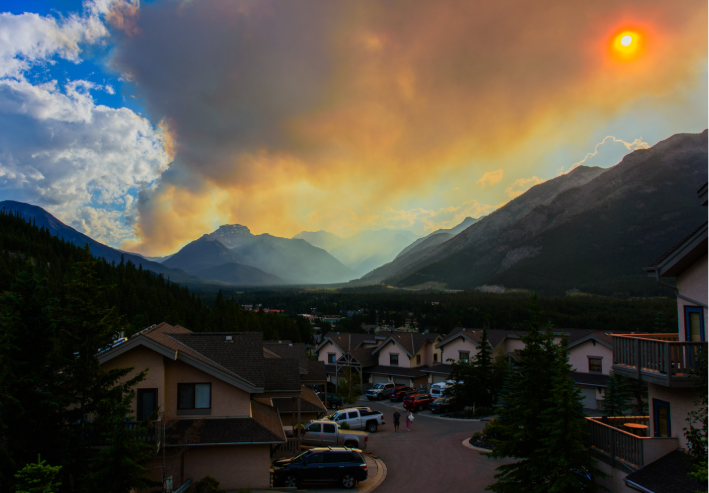
Northern Alberta faced major wildfire events in 2024, particularly in Jasper and the Peace Region, with the Jasper Fire alone resulting in $1.2 Billion in insured claims.¹⁵ In 2025, the region has already seen flooding and windstorm losses, increasing demand for reconstruction and pressuring limited regional resources. The loss, especially that of Jasper, is pulling resources away from the Edmonton market as those teams focus on the rebuilding of infrastructure and rebuilding residential and commercial buildings. There have been over 100 building permits for Jasper in 2025 for the rebuilding of properties, all part of the rebuild with crews coming from all over the province as part of the process.
In high-risk areas, property values have spiked as much as 40% due to reconstruction demand and constrained contractor availability.¹⁶ As demand continues to outpace supply, accurate valuations are more important than ever.
In Edmonton, construction costs are being shaped by a surge of city-led infrastructure projects, particularly in transportation and civic facilities. Major investments include ongoing LRT expansions and upgrades to recreation centres, fire halls, and maintenance facilities, all competing for labour and materials.¹⁸ Additionally, the downtown core is undergoing significant redevelopment, including park revitalizations, residential infill, and extensive road work—creating overlapping demand across public and private sectors that continues to drive up construction timelines and costs.¹⁹
Sector Insights
Despite some optimism, the construction sector in Northern Alberta began 2025 cautiously. Overall permit values declined by 8.9% in Q1 year-over-year.¹⁷
Institutional permits fell by 41%, followed by a 33% drop in industrial activity. However, residential and commercial permits posted modest gains, buoyed by housing needs and commercial recovery in mid-sized centres.
Major capital projects, including the twinning of Highway 63, the Peace Region Power Corridor expansion, and the Fort McMurray Water Treatment upgrade ($825M), continue to reshape the region. These initiatives are inflating demand for trades and materials, particularly in nearby residential markets.
In Edmonton, construction costs are being shaped by a surge of city-led infrastructure projects, particularly in transportation and civic facilities. Major investments include ongoing LRT expansions and upgrades to recreation centres, fire halls, and maintenance facilities, all competing for labour and materials.¹⁸ Additionally, the downtown core is undergoing significant redevelopment, including park revitalizations, residential infill, and extensive road work—creating overlapping demand across public and private sectors that continues to drive up construction timelines and costs.¹⁹
Risk Mitigation for Condos
Reserve Fund Studies:
Rising construction costs can quickly outpace capital plans. Regularly updating reserve fund studies ensures adequate funding for repairs—helping condo corporations avoid levies or borrowing.
Climate Resilience:
Wildfires, floods, and windstorms are rising in frequency. Proactive upgrades such as fire-resistant landscaping, backup generators, and water mitigation systems reduce future insurance claims and potential damage.
Annual Insurance Appraisals:
Although Alberta does not mandate insurance appraisals at fixed intervals, conducting them annually is a prudent and critical practice. With construction costs fluctuating due to volatile material and labour markets, rebuild values can change rapidly—making annual appraisals indispensable for maintaining sufficient coverage and ensuring peace of mind.
Final Thoughts
Northern Alberta’s construction industry is navigating a perfect storm of cost escalation, labour shortages, climate impacts, and market volatility.
For condo boards and managers, staying ahead of these challenges requires a proactive approach—starting with up-to-date valuations, risk mitigation planning, and sound financial forecasting.
Under the Alberta Condominium Act, corporations are required to insure both the common property and individual units to their full replacement value. To ensure accurate coverage, it is recommended that corporations obtain an independent insurance appraisal from a qualified third-party firm on an annual basis.
Omar Khan, Manager of Business Development at Normac, Canada’s leading insurance appraisal firm, brings over a decade of condominium industry experience. He has presented seminars and authored articles nationwide, sharing expertise on insurance appraisals, construction cost inflation, and industry best practices with CCI chapters across Ontario, BC, Alberta, and Manitoba.
Endnotes
- Statistics Canada, Building Construction Price Index, Q1 2025, April 25, 2025. https://www150.statcan.gc.ca/n1/daily-quotidien/250425/dq250425b-eng.htm
- RLB Canada, Construction Cost Report Q1 2025, February 2025. https://www.cadcr.com/canadian-construction-costs-climb-toronto-sees-crane-index-increase- while-calgary-holds-steady
- Normac estimate based on aggregate construction industry trend tracking and regional cost indexes.
- BILD Alberta, Q1 Market Housing & Rental Report, 2025. BILD_QuarterlyReport_Q1_2025
- Government of Canada, “Canada’s Response to U.S. Tariffs on Steel and Aluminum,” January 2025. https://www.fin.gc.ca/n25/25-001-eng.asp
- Ibid.
- RLB Canada, Construction Cost Report Q1 2025.
- IEA, Crude Oil Market Update, April 2025. https://www.iea.org/reports/oil-market-report-april-2025
- CBC News, “Canada hits U.S. with tariffs on $29.8B worth of goods after Trump slaps levy on metals,” March 2025.https://www.cbc.ca/news/politics/canada-retaliatory-tariffs-1.7481258
- Dentons, “Building under pressure: How tariffs are reshaping Canada’s construction landscape”, April 2025. Dentons – Building under pressure: How tariffs are reshaping Canada’s construction landscape
- Windsor Star, “Canadian construction industry handcuffed by tariff uncertainty”, June 2025. https://windsorstar.com/news/local-news/local-construction-industry-handcuffed-by-tariff-uncertainty
- BuildForce Canada, “Alberta Construction Outlook 2025–2033,” March 2025. https://www.globenewswire.com/news-release/2024/03/27/2853075/0/en/Construction- employment-growth-in-Alberta-to-2033-is-driven-by-strong-non-residential-demands.html
- ICBA Alberta, Labour Market Report December 2024. https://icbaalberta.ca/wp- content/uploads/2024/12/ICBA-Alberta-December-2024-Web.pdf
- Insurance Bureau of Canada (IBC), “$8.5 Billion in Weather Damage Sets New Record,” January 2025. https://www.ibc.ca/news-insights/news/2024-shatters-record-for-costliest-year-for-severe- weather-related-losses-in-canadian-history-at-8-5-billion
- CBC News, “Jasper Recovery Efforts Continue as Insurers Finish Clearing Debris Left By2024 Wildfire”, May 2025. https://www.cbc.ca/news/canada/edmonton/jasper-recovery-efforts-insurer- led-program-clear-debris-1.7525233
- Normac internal regional analysis, Spring 2025.
- Eye on Housing, “Permit Activity Declines in Q1 2025,” May 2025. https://eyeonhousing.org/2025/05/permit-activity-declines-in-march-2025
- City of Edmonton, “Building Edmonton: Projects Map,” accessed July 2, 2025. https://building.edmonton.ca/projects?categoryId=LRT:,Facility:&tab=projects
- Jonny Wakefield, “From Parks to Parking Garages: City of Edmonton Gears up for Busy Construction Season,” Edmonton Journal, April 24, 2024. https://edmontonjournal.com/news/edmonton-construction-downtown-park-residential-roads